
The Professional Hockey Players' Association

Mental Health Resources Overview

No doubt, the life of a professional hockey player can be a grind. Thankfully, the importance of mental and emotional wellness is not only being acknowledged but emphasized. Below are some critical resources available to PHPA Members and we encourage you to take full advantage of them.

First Line Mental Health Training Program

The FIRST LINE Mental Health Training Program is an education and leadership initiative that equips professional hockey players with the knowledge and skills to recognize mental health challenges, provide peer support, and connect teammates with appropriate resources when needed.

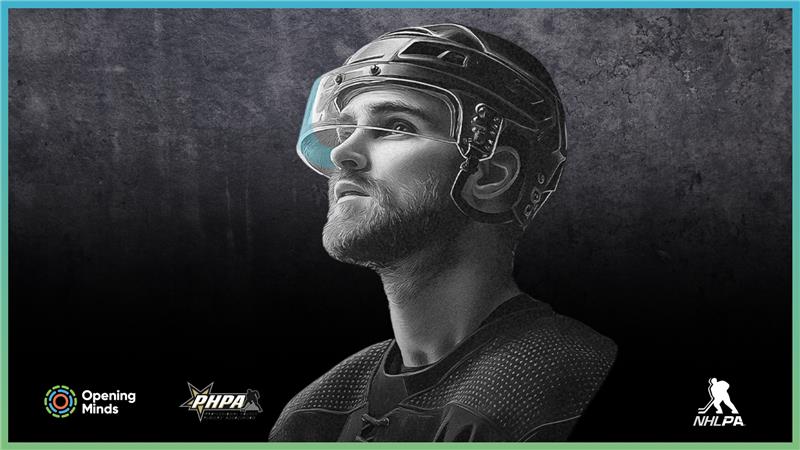
Developed by the NHLPA in partnership with the Mental Health Commission of Canada’s Opening Minds program, FIRST LINE was expanded to PHPA members in 2025.

The program is designed specifically for the unique pressures of professional hockey and addresses common mental health topics such as anxiety, depression, substance use, and self-harm. Participants learn how to identify signs of both positive and declining mental health, reduce stigma surrounding mental health conversations, and support fellow players in a meaningful and proactive way.

Delivered in small-group sessions by PHPA Health & Wellness Specialist Chuck Thuss – a former player himself – the training empowers players to serve as trusted leaders within their dressing rooms and organizations. Players who complete the program receive a certificate of completion from the Mental Health Commission of Canada.

FIRST LINE complements the PHPA's existing mental health resources by helping players recognize when someone may be struggling and encouraging early intervention and help-seeking behaviours—both for themselves and their teammates.

Working with Opening Minds, a social enterprise division of the Mental Health Commission of Canada, the NHLPA created FIRST LINE and offered this customized program to its membership in 2024.

We felt that it was important to support our fellow professional hockey brethren and are happy to contribute FIRST LINE for use by the PHPA. From an impact perspective, we are seeing that FIRST LINE is giving Players more confidence to talk about mental health with others, they are experiencing less stigma towards mental health challenges, and they are gaining a greater appreciation for the unique mental health challenges elite athletes may encounter. Most importantly, Players are feeling more capable and willing to engage in mental health conversations, which is really what FIRST LINE is all about.

Dr. Jay Harrison,
Wellness, Transition, and Performance Specialist with the NHLPA and former NHL player

First Line Contact Information

If You Are In Distress

Call or text 988 at any time

Contact Chuck Thuss
The PHPA's Mental Health and Lifestyle Coach

In Case of an EMERGENCY Call 9-1-1

Or go to your local emergency department

REDLINE – It's Time to Talk

Professional hockey players deal with a vast array of issues on and off the ice in their pursuit to reach the next level of the sport. Even when a player is performing at his peak on the ice, he may have some off-ice issues that need attention.

It is for this reason that the Professional Hockey Players’ Association (PHPA) has implemented the REDLINE as a free and confidential resource that PHPA Members and their families can turn to 24 hours a day, 7 days a week to speak to a trained professional about any issues impacting them.

Whether dealing with an injury, stress, anxiety, depression, addiction, relationship challenges, legal concerns, financial matters, or other mental health issues, players can contact the REDLINE anytime for free, confidential support.

Through the Ceridian LifeWorks program, with support from Programmed Insurance Brokers, the AHL, ECHL, and NHLPA, the PHPA created the REDLINE, a collection of resources designed specifically for professional hockey players to help members address challenges before they escalate.

If you need support or are concerned about a teammate, friend, or family member, the REDLINE is here to help.

Redline Resources

While everyone experiences difficult periods, changes in mood and behaviour can sometimes indicate a more serious issue. Depression is a growing concern, and many people struggle in silence due to a lack of awareness, embarrassment, or feelings of self-blame.

Depression is a real health issue - as real as a broken arm or torn muscle. It can affect how you feel about yourself and those around you, impact eating and sleeping habits, and take a toll on your physical health. If left untreated, depression can strain relationships, create challenges at work, lead to harmful behaviours such as drug and alcohol abuse, and last for weeks, months, or even years.

The good news is that depression is highly treatable, and you don’t have to do it alone. The REDLINE can help.

As a professional hockey player, you may occasionally need legal assistance. While your Agent or the PHPA can provide legal guidance in certain situations, sometimes the best option is to speak directly with an attorney.

  • Free 30-minute telephone or face-to-face consultations with a lawyer in all areas of the law:
  • Divorce & Family Matters
  • Real Estate Law
  • Criminal Law
  • Estate Planning & Living Wills
  • Immigration

Excludes Business & Employment Law

Resources: Lifeworks Complete "Will Kit"

Being away from family and friends is a common part of life as a professional hockey player. Whether travelling, relocating, or being away from your hometown, these challenges can be difficult for both players and their loved ones.

Research shows that strong relationships with family and friends can improve our health, increase happiness, and support overall well-being. Taking care of our relationships is an important part of taking care of ourselves.

Need support with important relationships in your life? Whether you’re facing challenges with a spouse, family member, friend, or child, the REDLINE can provide information and assistance when you need it.

Family Issues - Domestic Violence

Domestic violence can affect anyone, regardless of background or circumstances. If you or someone you care about is experiencing domestic violence, the REDLINE provides confidential support whenever you need it.

Resources:

10 Tips for Building a Strong Relationship

Achieving Your Unique Work-Life Balance: Tips for Fathers

Addiction can take many forms, including the use of drugs, alcohol, the internet, or gambling. While these behaviours may provide temporary relief from stress, depression, or anxiety, they can worsen problems over time and turn coping mechanisms into addiction.

Left untreated, substance abuse and addiction can negatively impact your health, relationships, and work. The good news is that treatment options are available, and the REDLINE can help connect you with resources wherever you are.

Resources: Access REDLINE's resources for Addiction on the Lifeworks website

Most people experience stress at some point in their lives. However, if feelings of stress or anxiety begin to interfere with your well-being, the REDLINE can help.

Resources:

Breathe

5 Ways to Simplify Your Life,

Former NHL player Shane Corson opens up about anxiety problem: 'It took over my life'

Mental Health a big factor in pro hockey

Mental health education taking forefront in NHL Flames view it as the next stage in player development


Every player’s financial situation is unique. Regardless of your circumstances, understanding your expenses and planning for your financial future is always important.

The REDLINE provides financial support, from managing expenses and spending habits to saving for the future. Ceridian’s expert consultants provide the support, information, and resources you need.

According to the Centers for Disease Control and Prevention, a “concussion is a type of traumatic brain injury—or TBI—caused by a bump, blow, or jolt to the head or by a hit to the body that causes the head and brain to move rapidly back and forth.”

Many concussions occur without blacking out or being knocked unconscious. The severity of the injury depends on many factors and is not known until symptoms resolve and brain function is back to normal. Concussions are not created equally and, like all injuries, should be evaluated by your Club’s medical staff.

Common Concussion Symptoms:

Concussion symptoms can vary and may not appear until hours or days after the injury.

Symptoms may include:

  • Balance problems, Confusion, Difficulty concentrating, Difficulty remembering/recalling information, Difficulty thinking clearly, Dizziness, Double/blurry/fuzzy vision, Feeling more emotional, Headache, Irritability, Loss of consciousness, Loss of energy/feeling tired, Nausea and/or vomiting, Nervousness/Anxiety, Sensitivity to light and/or noise, Slowed reaction, Sleep disturbances (sleeping more or less)

Symptoms may worsen with physical or mental exertion (e.g., lifting, computer use, reading)

If you think you have/had a concussion:

  • Immediately report any concussion-related symptoms to your athletic trainer or team physician. Never ignore symptoms, even if they seem mild. If you don’t feel right or like yourself after any head or body trauma, seek medical attention to ensure you receive proper care.
  • Help protect your teammates. If you believe a teammate has suffered a concussion or is experiencing symptoms, encourage them to report it immediately to the Club’s medical staff. Reporting symptoms early can help protect their careers, and more importantly, their lives.
  • Contact the PHPA Hockey Operations department at 1-800-565-0716 for more information regarding concussion awareness, management and prevention.

Your brain is the most vital organ in your body. Practicing or playing while still experiencing symptoms can prolong the time it takes to recover and return to play.


While “playing through” other injuries may be tolerable and medically acceptable, “playing through” a concussion can lead to further injury and even death. Repetitive brain injury, when not managed promptly and properly, may cause permanent damage to your brain.

Not reporting your symptoms can seriously affect the quality of your life in the future.

 

Redline Contact Information

If You Are In Need Of Assistance

Place a confidential call to the REDLINE

Contact Chuck Thuss
The PHPA's Mental Health and Lifestyle Coach

In Case of an EMERGENCY Call 9-1-1

Or go to your local emergency department
The Professional Hockey Players’ Association, through superior preparedness and experience, is committed to the enhancement and protection of Players’ rights.
Official Bargaining Unit for all professional players in the AHL and ECHL

Copyright © 2026. Professional Hockey Players' Association. All rights reserved.