WINNIPEG – Mikko Rantanen was six games into the journey and he had already come to an important realization about his transition to the North American game.
And while many young players are determined to skip the important step in the process, the Finnish forward knew exactly what was required.
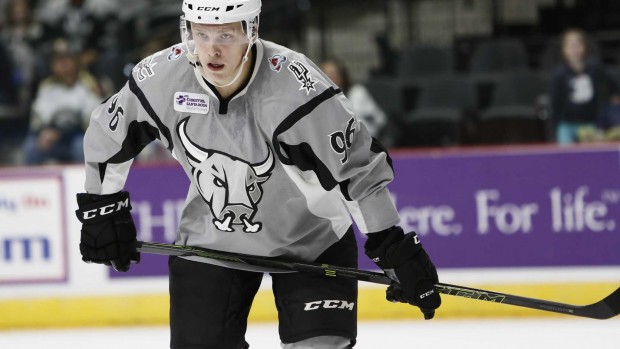
So when Joe Sakic, who was the general manager of the Colorado Avalanche at the time, approached him about the prospect of being assigned to the San Antonio Rampage of the American Hockey League, Rantanen was not only okay with it – he embraced it with open arms.
Years later, after becoming one of the best players in the NHL (more on this subject a bit later), Rantanen, who enters Sunday’s action tied for 11th in league scoring with 14 goals and 31 points in 22 games, took time to reflect on why that time in the minors was not only necessary but beneficial.
“I started the season in the NHL, I played six games but I didn’t play that much – maybe averaging eight minutes a game,” Rantanen said during a trip to Winnipeg late last week. “It was a good decision by Joe (Sakic) to send me there for the whole year, to play 20 minutes a night, play special teams and even though I liked the small rink, it was still different to the big rink I was used to.
“I was on board. I just wanted to play more. I was still turning 19 when I got sent down. I knew I could still develop my game and I would rather play 20 minutes than eight minutes. I thought it would be better for me. I talked to my parents and they agreed. Everybody agreed. Looking back, I would do it 100 per cent again, for sure.”
When you look up at the scoring leaders in the NHL these days, it’s easy to forget that Rantanen spent any time in the AHL, let alone 52 games during the 2015-16 season (where he put up 24 goals and 60 points in 52 games) and then another four in October of 2016-17 before graduating for good.
What you can be sure of is that Rantanen no longer flies under the radar when it comes to opposition pre-scouts and preparation. He’s become a player opponents and coaching staffs prepare for, even if devising a game plan to try and contain him can be an incredibly difficult challenge.
“He is dynamic. He is a lot faster than you realize he is. He’s a lot stronger than you realize he is. He’s got a really high hockey IQ and tremendous skills,” said Winnipeg Jets coach Rick Bowness, who has watched the evolution first-hand during his time in the Central Division. “He is an elite player and you better respect the fact when he is on the ice. But his confidence has grown over the years and he makes a lot of great plays. A very difficult guy to play against because of his size and his skating, strength and hockey IQ. Give him full marks, he’s come a long way from when he first came into the league until now being a premier winger in this league.”
The subject of Rantanen’s standing accidentally became a topic of debate within the Avalanche room during separate conversations with a pair of long-time teammates who think highly of him.
Avalanche defenceman Erik Johnson was raving about Rantanen on one side of the room, praising his combination of skill and strength.
“I do remember when I saw him at that first training camp, the skill was obvious right away. Patrick Roy was our coach at the time and I told him at the time, this kid is going to be really good,” said Johnson, the longest-serving player on the Avalanche roster. “I don’t think (Rantanen) expected to play in the NHL right away. He was a realist with himself. He went down and worked on his game in the minors and has been one of our best players ever since.
“You never know how long it’s going to take. Some guys adapt right away, some guys need some time. But as a bigger guy, you maybe need a little time to marinate and have his body catch up with his skill. That’s what happened and now he’s probably the best power forward in the league.”
A quick stop at the stall of veteran forward Andrew Cogliano brought a similar response.
“Off the ice, a great person to have in our room and on the ice, I think he is the best power forward,” said Cogliano, who has more than 1,000 NHL games on his resume and joined the Avalanche prior to the trade deadline last season. “If it was my team, he’d be the power forward that I’d want. Just phenomenal with the puck, strong, big, protects it the best in the game, really. But his play with the puck is second to none.
“His stickhandling and how he makes little things happen. His passing. He’s a playmaker and he’s a shooter. He’s a guy that I’ve had a new appreciation for playing with, for sure. Just his overall compete (level). He’s really hard on pucks. He’s very big and when you play that hard, you just can’t get the puck off him.”
Bringing the power forward label across the room to longtime linemate Nathan MacKinnon brought an unexpected response, though he quickly provided some valuable context to why he didn’t like to limit Rantanen, to being a power forward – even though it was meant as a compliment.
“I don’t know exactly what you mean by power forward,” said MacKinnon, who was then told a few teammates used the term to describe Rantanen. “Yeah, I guess so. He’s just one of the best forwards in the game. Power forward, I feel like it limits you just because you’re big. He’s one of the best players in the league, obviously one of the best wingers. He does everything so well.
“Skates really well. Vision, shot and obviously he’s 6-foot-4 and it’s really easy to play with someone like that. He’s been one of the best for four or five seasons now, at least. An amazing playoff player as well. If you look at his playoff numbers, they’re some of the best of all time. Sometimes that gets overlooked a little bit. He’s been so clutch for us.”
Avalanche head coach Jared Bednar has come to appreciate a wide variety of things about Rantanen during his tenure, which includes winning a Stanley Cup together last June in an exciting six-game series with the Tampa Bay Lightning.
“The biggest thing for me where I think he’s elite, not unlike a guy like (Leon) Draisaitl, but to be able to control the puck with players on his back, to protect it and still be able to keep his eyes up and make plays,” said Bednar. “They draw duplication in coverage and still see the open man. To be able to have the skill and ability to still make those plays under pressure, he’s been outstanding at it, both at five-on-five and on the power play.”
Johnson sees a bit of NHL legend Jaromir Jagr and former Avalanche star Peter Forsberg in Rantanen’s game to go along with his selfless attitude.
“It’s crazy that we got him at 10, I mean he’s such a good player,” said Johnson, referring to the fact Rantanen was chosen 10th overall in the 2015 NHL Draft. “The game just comes so natural to him. When you play with Nate (MacKinnon), it’s a big ask and they demand a lot out of each other. Not everyone can play with those guys. Nate is not as good of a player without Mikko and vice versa, those two as a pair really found some good chemistry.
“One of the things when most guys who come to our team that haven’t met him before, the first thing that sticks out is that they’re surprised how big he is. He’s a huge guy and he plays a hard game. Those are tough minutes. He’s a little bit like Forsberg or Jagr, in a way. He reminds me of those guys in a way. They take a lot of abuse because they’re so big. It’s not an easy job to do, but he makes it look really easy.”
Injuries have been a major storyline for the Avalanche during the first quarter and change of the title defence (with all of captain Gabriel Landeskog, Valeri Nichushkin, Evan Rodrigues and Darren Helm sidelined up front to go with a few notable absentees on the back end) and given all of those players missing, Rantanen understands the importance of doing what he can to try and help pick up the slack.
“A little bit of a slow start. We’ve had that a few years in a row, where we feel like the first seven or eight games are sometimes a bit below .500 but we got back to our basics and the work ethic got better and we’re playing the right way again. We’re not cheating on the offensive side. We’re playing on both sides of the rink and that’s how you win games,” said Rantanen, whose Avalanche team has managed to do more than just tread water in the race for top spot in the Central Division. “The way we played in the playoffs last year. We played in our structure and we played fast and we were a heavy group. That’s how we have to play in the regular season too, because now we’re the defending champions and every game is a bit more challenging because guys always want to beat the defending champs. We just have to bring it every night to have a chance.
“With all of the injuries we have, we know that we have to carry the load a little bit more and we have to play responsibly. We have to defend the right way because we play against good players. Both sides of the puck, of course.”
One of many magical moments during the mayhem on the ice after the Avalanche had wrapped up the Stanley Cup last season included a photo opportunity for the five players still on the roster that were part of the 2016-17 club that won only 22 games – Rantanen, Johnson, MacKinnon, Landeskog and JT Compher.
Going from the low of being part of one of the worst teams in modern-day history to capturing the championship made things even more surreal to the members of the core group.
“It happened fast, when you think about ‘16-17, being last in the league and five years later, you win,” said Rantanen. “Those five guys, we stuck together and we just put our heads down and went to work. Of course, management made some good moves and got the right pieces around us. It was special to share it with those guys.”