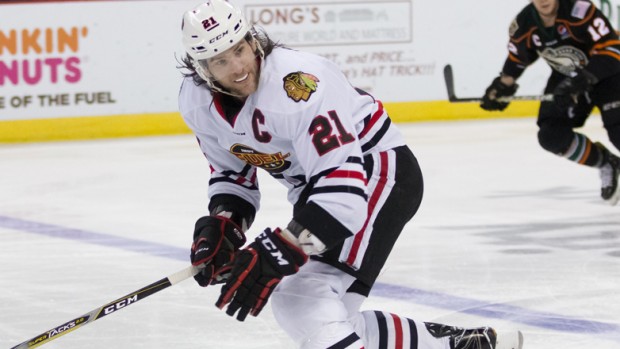
April 20, 2018 was a defining day in Michael Neal’s life, as he believed that, when skating off the ice, that was the last hockey game he would ever play.
That game was a heartbreaking 3-2 double overtime loss to the Toledo Walleye in game four of the first round of the 2018 Kelly Cup Playoffs.
Neal had nothing to hang his head about, though. He had played in 487 career ECHL games, 22 AHL games, and just captained the Indy Fuel to their first playoff campaign in franchise history.
Becoming the captain of a fire department would be his next life pursuit.
He was able to pursue this opportunity through the Professional Hockey Players’ Association (PHPA). The PHPA is the certified players’ union for the AHL and ECHL, with over 1,600 members.
The PHPA was able to fulfill Neal’s firefighting pursuit through one of the branches of their Career Enhancement Program―the Fire and Emergency Services Training Institute (FESTI).
“The PHPA has a partnership with FESTI at Pearson International Airport in Toronto,” PHPA Career Enhancement Program director Steve Carney said. “Our players and alumni receive a six-thousand-dollar discount from FESTI and up to 15 of our members can participate each year. Mike completed the program in 2018. There is an online component that the guys complete starting in January and then the practical portion takes place in the summer at the state-of-the-art facility in Toronto.”
This was something Neal had wanted to do for a long time, but he decided to pull the trigger at the end of last season.
“I got thinking about it, probably, three years ago, before my first stint in Indy, when I was only here for (21 games),” Neal said.
According to the FESTI brochure, “FESTI has become the pre-eminent provincial, national and international training facility for emergency services professionals. By providing exceptional instruction, in modern facilities to the highest standards, FESTI has emerged as the one stop training portal for emergency response training.”
This seemed like a perfect match for Neal, as the program would challenge the 6’2”, 187–pound hockey player’s strength, both mentally and physically.
“Many of the players explore firefighting because there are many similarities with playing hockey, in particular the physical demands and the necessity for teamwork.” Carney said.