At 22 years old, Dahlin ranks second among all NHL defensemen in goals (14) and points (55), and he’s on pace to shatter Phil Housley’s single-season record of 81 points by a defenseman.

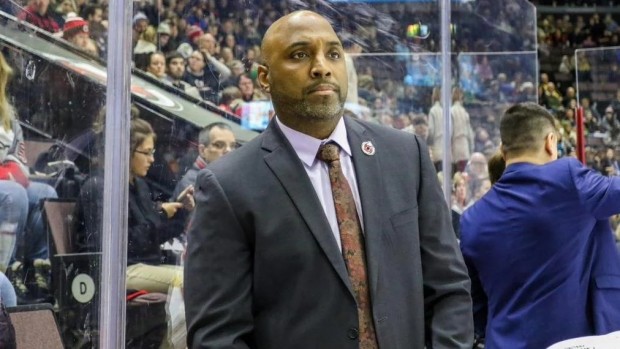
CINCINNATI – Jason Payne holds out his hands to display how he made a living playing professional hockey. The pinkie fingers aren’t completely straight. One knuckle is barely visible and scars line the other nine. He could work over a speed bag with punches and “not really feel it too much.” And when he runs a Cincinnati Cyclones practice, the mere activity of shooting pucks produces aches.
“It’s all catching up,” he said as points out the damage.
It was a living hard-earned for the Toronto native and son of immigrants. One-year contracts. Nearly two dozen teams. And an estimated 200 fighting majors.
As a player, Payne was an enforcer during an era when minor-league teams looked for on-ice policemen to protect their skill players and fill up the arenas in Flint and Quad City, Verdun and Bloomington, Reading and Wheeling, on Friday and Saturday nights. Take the family and grab the popcorn, here comes “Payner” and his fists. Go with your buddies for $2 beer night and be rewarded – one of the toughest guys in hockey was in town to battle.
Compare that buzzsaw approach to the one Payne, one of only two Black head coaches in North American pro hockey, has adopted behind the bench. In his second year leading the Cyclones – the Sabres’ ECHL affiliate, two rungs below the NHL – he has earned respect sport-wide for his player development skills and cerebral approach, which has allowed him to rise from scout/skills coach in the Ontario Hockey League.
Walk into the Cincinnati locker room and large logos of the Sabres and AHL’s Rochester Americans hug the hallway. That’s the goal for the players – show enough to get a promotion from their “Double-A” league. And that’s the goal for Payne – follow in the footsteps of coaches such as Sabres assistant Jason Christie and Stanley Cup-winning Colorado coach Jared Bednar, longtime ECHL bench bosses who reached the big league.
“We know (Black players and coaches) always have to be that much better, which the unfortunate reality is,” said former NHL goalie and current television analyst Kevin Weekes, who has been friends with Payne since they were 13 years old. “(Payne has) certainly earned a promotion and has opened a lot of eyes.”
The NHL has had only one Black head coach in its history – Chicago’s Dirk Graham, for 59 games in 1998-99.
“It’s awesome to see (Payne’s) rise and how he’s helped young players,” said Christie, who played against Payne in the ECHL and coached in the league for 18 years. “He puts in the work and he’s such a good person. The sky’s the limit for him, no question.”
Hockey an early passion
Payne’s hockey story runs parallel with so many kids in Toronto – he started skating at age 4 and soon discovered the quicker he learned brake control, the sooner he would stop crashing into the boards. End of parallel path, though. The way he got to the rink, the way he made a team, the way he switched from goalie to forward? It required a different want-to level.
Payne’s parents were often at work. Josephine had two jobs – Revenue Canada and the old Simpsons department store. His father, Ted Cato, worked for Bell Canada and tried to attend games when possible. Josephine never had a driver’s license, which complicated getting to and from practices and games. She would get home from work, scoop up Jason and get on the bus or subway – and if they were running late, Jason would start putting on his hockey equipment while en route. Other times, he would take the subway to the stop by the Nobili house; Mark Nobili was a teammate and Nobili’s older brother, Jason, would coach Payne years later in the ECHL and help start his coaching career.
“He almost became an adopted brother to us,” Jason Nobili said.
Payne encountered with Weekes early on and they reconnected at age 13 and both were goalies.
“He was a talented goalie,” Weekes said. “I’ll put it this way: There were a couple of instances when he was in the net and people thought it was me. That’s not to pump my tires, but to speak to how skilled he was.”
Payne moved from goalie to forward when playing minor bantam, but started his age-13 season without a team. He was still adjusting to the skating with normal blades and not those of a goalie and still trying to find his slap-shot form after realizing ice hockey required a different approach than floor hockey.
Much as he would be throughout his 47 years, Payne was undeterred by what some would call a setback, but he viewed it as adversity to overcome. His plan was to play as much “shinny” (pick-up) hockey as possible to improve his skills. One day, a coach from the Toronto Devils watched and asked Payne which team he was attached to. The Devils started Payne’s climb up the minor-hockey ladder.
Progress was being made as a hockey player, but Payne received more attention for football. He played running back, inside linebacker, punt returner, punter and even long snapper and received recruiting letters from the Canadian colleges and Iowa, Indiana and Illinois. He visited Michigan State. But he wanted a hockey path.
“I was never really about school; that wasn’t me,” Payne said. “Hockey was a passion and I was told I wasn’t good enough the whole time through. I used that as fuel to get better every day.”
Payne tried out – and was cut – by several Ontario Hockey League teams before playing 20 games for the London Knights in 1994-95. He appeared in 14 games the next season for the Barrie Colts.
“That was a dream come true for me at that point,” Payne said. “But it wasn’t the end of the road. I had a lot more to do and a lot farther to go. The work didn’t stop in the OHL. It started there.”
Demanding role as player
Payne played for the RiverBlades (Arkansas) and Everblades (Fort Myers, Fla.), the Icemen (Binghamton) and IceCats (Worcester), the Thunder Cats (Thunder Bay) and Prairie Thunder (Bloomington), the Steelheads (Idaho) and Nailers (Wheeling), the Monarchs (Carolina) and Royals (Reading).
Over 14 seasons, Payne played for 22 teams in the Colonial, United, American and East Coast leagues and two professional leagues in Quebec. He played for four teams in his first full season. Only three times did he stick with a team for an entire year.
“It was the way of life for me,” Payne said. “You want to be able to lay your head on one pillow and be comfortable. Every year, I was fighting for a contract.”
Literally. Such was the path for somebody well-versed in the sweet science, which was multiple times more prevalent than in today’s minor-league game.
Go ahead and check it out. Go ahead to YouTube and search “Jason Payne Fights.” After the faceoff, stick down, gloves off and helmet tossed – Payne was there to battle the other team’s toughest player (or players), game in and game out. It was his way of leading, his way of surviving. In a combined 571 regular season/playoff games, he had 32 goals and 46 assists … and 2,017 penalty minutes. His right fist chugging like an engine piston, the videos show a man who was fighting bigger men, but usually ended on top of the judge’s figurative scorecard.
“The most (demanding job) ever – next to goalie, I would say the most-ever,” Weekes said. “Just courage beyond. Just bravery beyond. It’s unforgiving.”
It wasn’t that way for Payne in junior hockey – 70 penalty minutes in 34 OHL games. But upon signing with the Utica Blizzard of the Colonial Hockey League (soon to be renamed the United Hockey League), he wasn’t necessarily challenged by older players, but folded himself into the role.
“It was my niche; it was where my strengths were,” he said. “Fighting to me is an art. I never really did things for myself, it was more for the team and when things needed to be taken care of. It’s a part of my life that I lived. Would I change it? No. That’s what molded me into what I am today.”
Graeme Townsend, a longtime friend, illustrated the role of enforcer in semi-chilling detail. Sleepless nights and anxious moments. Looking at the opponent’s roster for the next game and deducing, “OK, I’ll have to fight this guy tomorrow night,” or, “I’ve got this team coming up and five guys fight so that’s going to be a tough night.” The mental gymnastics are as significant and taxing as the physical struggle and the thump, thump, thump on the exposed skull.
The injuries began to pile up aside from the carnage to his hands. Cracked jaw. Dislocated shoulder. Torn bicep. Sprained ACL. Sprained ankle. Sprained wrist. The torque put on his upper body in general and his shoulders in particular became overwhelming.
“It got to a point where I realized, I had to get in the gym and stay in the gym because that’s the only thing that will keep my body together,” Payne said. “I know the wear and tear I put it through and I had to be prepared to withstand it.”
Payne reached the cusp of the NHL four times, playing a combined 71 games in the AHL for Carolina (Weekes was a teammate), Cincinnati, Worcester (which was coached by the Sabres’ Don Granato) and Saint John. But always, it was back to the ECHL or another league.
To prepare for the rigors of a season – game/fight Friday, game/possible fight Saturday, same on Sunday – Payne started an intense summer training routine and was recommended to Paul Vincent, a renowned skating and development coach whose base is on Cape Cod.
“Mr. V taught me some, good hard lessons in how to be a man and grow up and mature,” Payne said. “As a young guy, you don’t understand it then, but you do as time goes on. To this day, I still appreciate it.”
Relayed Payne’s comment over the phone, Vincent said: “That makes me proud. The thing I take pride in is helping somebody who wants to be successful and outworks the next guy. That’s what Jason did and still does. He has outworked everybody to get to where he is.”
Townsend also trained with Vincent, started a hockey school in Toronto and enlisted Payne to help on the development side.
At 22 years old, Dahlin ranks second among all NHL defensemen in goals (14) and points (55), and he’s on pace to shatter Phil Housley’s single-season record of 81 points by a defenseman.
Payne’s playing career was winding down, but he wanted to stay in the game anyway, anyhow. He started a skill school – Precision Skating. Too much passion remained inside him to cut ties with the game he was hooked on.
Entering coaching
Remember the Nobili family from Payne’s youth, the folks who would provide transportation and the occasional dinner? It is now 2008. Jason Nobili was the coach in Reading, Pa., and after a free-agent practice in Toronto, Nobili offered Payne a chance to join Reading as a player/de facto assistant coach.
“Hey, I’ll take you under my wing and show you some things if you want to get into coaching down the road,” Nobili recalled telling Payne.
“That’s how it started,” Payne said.
Payne completed his playing career and moved back to Toronto, where Nobili again provided an opportunity as his assistant on the Toronto Jr. Canadiens (Ontario Junior Hockey League).
Several years of skill development served as his foundation – he knew how to talk to and coach and lead young players. His new joy was seeing them get better. In 2011, Payne received what he believed was a major break, joining the OHL’s Kingston Frontenacs as skating coach/scout. Show his worth in North America’s premier development league and he would advance. But it didn’t happen.
“I thought, ‘I want to make it back to the OHL,’ because I knew I could develop the young kids,” Payne said. “I was never really given a full, fair opportunity from anybody that I felt I warranted.”
One year in Kingston was followed by stops as an assistant coach for the Under-16 Mississauga Senators, the skating coach at St. Andrew’s College, and the head coach of the Toronto Patriots. In 2017-18, he joined the OHL’s Niagara IceDogs as a skating coach, but again, just for one season.
Over the course of an interview, Payne only expressed disappointment with his career path just once – the OHL experience. But he didn’t whine to his friends. Payne’s skating school was a success each summer and he held different roles around the area. He wasn’t waiting for a phone call (not his style) so he wasn’t expecting Matt Thomas’ text message before the 2018-19 season.
Payne’s teammate in 1993 with the St. Michael’s Buzzers, Thomas played at RIT and entered coaching, leading two ECHL teams (Fresno and Stockton) and one NCAA program (Alaska-Anchorage) before returning to the pro ranks and Cincinnati. Thomas quickly reached out to Payne.
“There were a few things that were very important for the Sabres and it was the development piece from different angles – developing the prospects, but also strength and conditioning and power skating,” Thomas said. “Just a skill emphasis. Right away, one of the names that came into my head was ‘Payner,’ because I knew he was excited for a new challenge and felt like he wasn’t getting the opportunities in junior hockey that he wanted. I felt he would be a perfect fit.”
Payne moved to Cincinnati to serve as Thomas’ lone assistant coach and assumed the do-everything-and-do-it-well-and-do-it-quickly routine. Hotels. Bus. Meal money. Housing. Off-ice training. And the biggest part, immigration. All before he stepped on the ice for practice or stationed himself running the Cyclones’ defense.
“You wear so many different hats and you have to keep an even keel and understand that the most important thing are the players,” Christie said. “You’re going 24 hours a day … not 23½.”
Payne was a perfect fit in two ways: Thomas’ aforementioned analysis that a player development background was key in the ECHL and, having moved (almost) everywhere and seen (nearly) everything during his career, he could relate and connect to the ever-changing roster. He had been a bottom-six forward scratching for minutes. He had been traded midseason and forced to adapt to a new system. He made a living on one-year contracts. He had been able to stretch the weekly salary ($500-$1,000).
“He can connect with the guys who are struggling and don’t know where their next move is or where they’re at in their career,” said Cyclones captain Justin Vaive, whose father, Rick, played 876 NHL games for Toronto, Chicago and the Sabres, and was the first player whose autograph Payne got. “It allows him to offer insight and help guys along the way because he’s been through it and he knows what they’re feeling.”
In Thomas’ two seasons with Cincinnati, the Cyclones went 89-30-16 in the regular season. Weeks before training camp was scheduled to open in 2021, Thomas was hired as an assistant coach by AHL Providence.
The roster in place, Payne was promoted, becoming the third head coach of color in ECHL history and, at the time, the only one in North American pro hockey.
Earning next opportunity
The Cyclones went 36-32-3-1 last season and entered the weekend 22-11-5-2, good for second in their division.
Payne’s coaching style in summation: Less is more. Fewer words have a bigger impact. Fewer new drills in practice produce a quicker tempo. On Dec. 30, the Cyclones led 5-4 at Indianapolis entering the third period but lost 9-6. Payne didn’t address the players in the postgame locker room, his rationalization that they knew what transpired. He was the last one to board the bus – “Thank God,” defenseman Josh Burnside joked, adding it meant players didn’t have to walk by him.
The next night, before a raucous New Year’s Eve crowd of 9,493, the Cyclones trailed Toledo 3-1 entering the third, but scored twice and then won in overtime. Watching Payne behind the bench is uneventful – he made two hand gestures the entire game. One to help the referee with a delay of game penalty (puck over the glass) and the other when he wanted his goalie pulled from the ice.
“He understands how to be effective on the bench,” Thomas said. “He knew what the players would respect. Just a great handle for how to be.”
Payne also has a handle on his future, which is taking care of the present. Worrying about the lack of Black coaches in the AHL and NHL means he is spending energy on other things except getting the Cyclones ready to play. Payne and Joel Martin (ECHL’s Kalamazoo) are the only two current Black head coaches in pro hockey. The AHL has only three Black assistant coaches (Texas’ Max Fortunus and Henderson’s Joel Ward and Fred Brathwaite). A member of the NHL Coaches’ Association BIPOC (Black, Indigenous and People of Color) Coaches Program, Payne participates in monthly Zoom sessions to connect with other coaches.
Townsend, who was the first Jamaican-born NHL player and also coached Macon in the ECHL, was asked if Payne must break through a figurative concrete-enforced ceiling to advance in pro hockey.
“I’ve always wanted to talk about this,” Townsend said. “I’m not to say things are easier (for Black coaches than in the past), but things are more accessible. I really, really truly believe that hockey people are all about what’s best for their organization and who’s going to help them win. My experience? I believe they’re color blind. A lot of people are going to disagree with me – probably 1,000 people are going to disagree with me. Jason won’t have a problem with that. In hockey, like anything else, it’s who you know. Simple as that. That’s the one barrier to entry for a lot of Black coaches who may not know the white people running organizations.”
Payne, who is married and the father of two daughters and lives full time in Cincinnati, wants to reach the AHL and NHL because his performance warranted a promotion. He knows he will have to earn it all.
“The only person I have to be better than is myself every day,” he said. “That’s the best focus to have. As long as I do that, I will keep preparing myself for when that opportunity arises. If you start saying, ‘I’m better than Person A and Person B,’ I’m not focusing on myself anymore. Is the NHL doing what it needs to do to bring change? Yes. Hockey itself is doing its best to get on the right path and really address the diversity issue.”
Payne cites Bednar, Granato, Paul Maurice (Florida), Rod Brind’Amour (Carolina) and Sheldon Keefe (Toronto) as coaches he admires. Bednar has won championships at the ECHL, AHL and NHL levels. Payne has a vocal advocate in Weekes, who reached the NHL as a Black goalie and now has the forum of national television to promote his friend’s ability.
“A lot of people would have quit a long time ago and done other things,” Weekes said. “His stick-to-it-ive-ness, even when the game didn’t love him back, shows how much he loves the game unconditionally and how committed he is to the game. The traits he has are very much in demand and good organizations value those traits. He’s hitting his opportunity out of the park. It’s amazing stuff.”
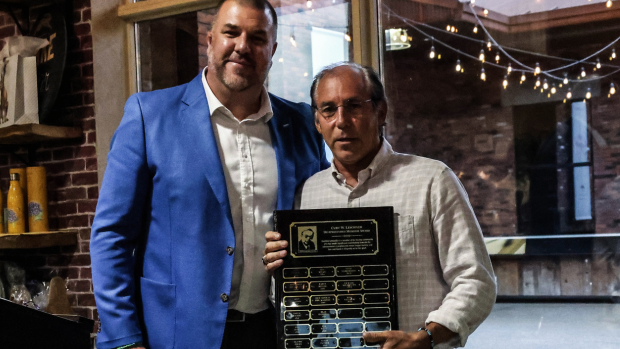
During the PHPA Annual Meetings, Executive Director Brian Ramsay surprised Bert Villarini by naming him the latest recipient of the Curt Leichner Distinguished Member Award.
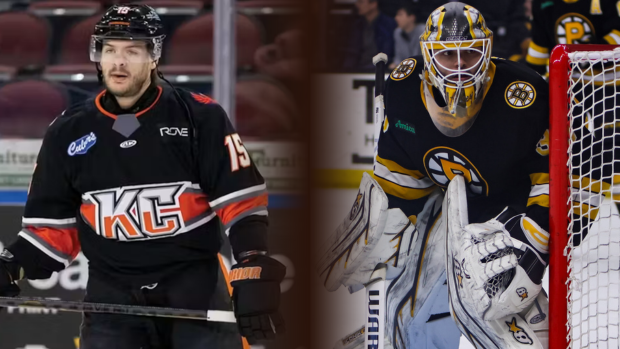
PHPA.com’s Tony Androckitis talks to Marcus Crawford and Michael DiPietro after they were named the inaugural winners of the Doug Messier Award
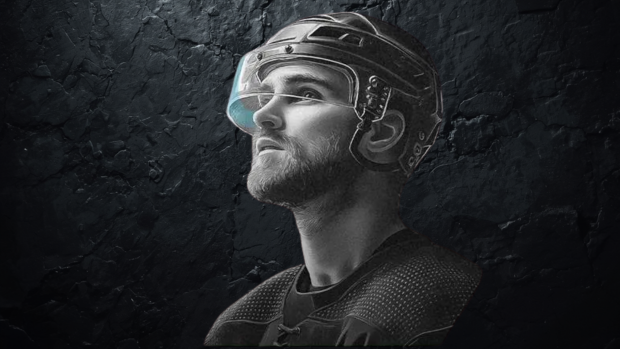
The FIRST LINE program is helping PHPA members enhance mental wellness, reduce stigma, and support one another beyond the game.



Copyright © 2026. Professional Hockey Players' Association. All rights reserved.