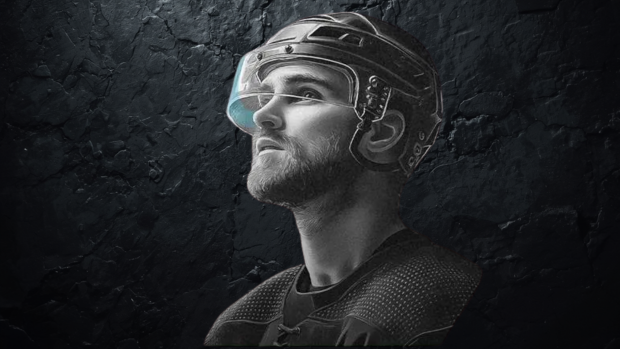
Among the NHL’s most established goaltenders is Jimmy Howard of the Detroit Red Wings who has built a career on clutch performances, saves that leave the opponents awestruck, and the highlight reel on slow motion replay. The veteran has played on legendary teams comprised of Hall of Famers and has been molded by the likes of legendary Red Wings goalies such as Dominik Hašek, Chris Osgood, and Manny Legace. After a productive summer of training, Howard is entering his 14th season of professional hockey, and reflects on a remarkable career to date while anticipating the upcoming season which includes taking on a leadership role as a bridge of knowledge from one generation of Red Wings greats to another.
Howard first became interested in hockey as a young child. His Father was the high school coach at Ogdensburg Free Academy and played an influential role on his career. “My father always had me around the rink. I was kind of a rink rat. As long as I can remember from four or five years old I was immersed in hockey. At Ogdensburg, I was there in the dressing room, on the team bus when my father let me, and just hung around the team any chance I had.”
Progressing from youth hockey through Junior and his time at the University of Maine, Howard recalled some of his favorite memories from his early career. “The number one highlight before I got to the University of Maine was when I won the Gold Medal with Team USA at the Under 18 World Championships. From there, with Maine playing in the National Championship game my sophomore year was one of the biggest highlights. Every single year we were having so much fun growing up, playing in front of sold-out crowds that love hockey.”
It was when Howard was 17 years old, playing in the U.S. National Team Development Program for the Under 18 National Team where he believes he was discovered by the Detroit Red Wings. While he isn’t sure exactly how he was discovered he did provide his take on it. “My old goalie coach Jim Bedard once explained to me that he went to Cornell University to watch David LeNeveu play [who went on to play in the NHL with the Oilers and Coyotes]. I was on the USA National Under 18 team, and at that time we played a college schedule just to get exposure. I was playing against Cornell and Jimmy liked my style and how I competed. I guess that’s how I landed on the Red Wings radar.”
Howard would eventually be drafted by the Red Wings in the second round of the 2003 NHL Entry Draft. “I remember my draft day. It was in Nashville and my whole family was there. It was a shock at the time getting selected by Detroit. I didn’t even know they were that high on me. When they called my name, I wasn’t expecting it and at the same time it was one big celebration with my family and having my now wife Rachel with me there as well. It was a thrill to be picked by an original six team with so much history and the high expectations they have each and every year.”
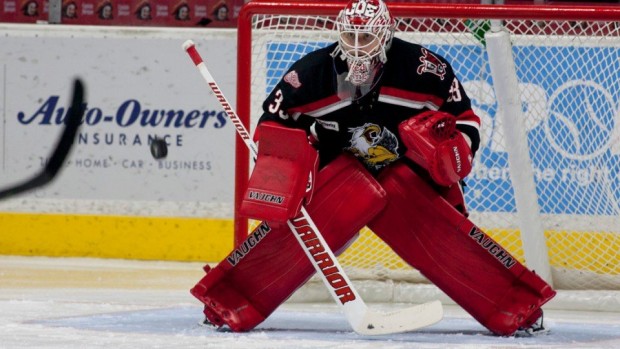
However, before he become the starting goalie with the Red Wings, like most NHL players, early in his career he cut his teeth in the American Hockey League (AHL) developing with the Red Wings’ affiliate, the Grand Rapids Griffins. “The AHL prepares players to be professionals coming out of college or junior. I was fortunate that the Red Wings tended to not rush their prospects. They like to give players the time to hone their craft and learn how to become a professional. In college to make it to the National Championship Game, you play 41 games. So you go from that to 80 games in the AHL. It was a huge adjustment for my first couple years. That’s where the professional development comes in and where you learn how to take care of yourself to perform every day.”
Howard’s development into a professional was also aided by the Professional Hockey Players’ Association (PHPA), the collective bargaining representative for AHL and ECHL players, which offers numerous off-ice programs to assist players and their families. “The PHPA was the first union I was ever a part of. I remember when they would come in and have meetings with us and really gave the players some great advice. For example, their banking partner (Meridian) helps players with financial planning and being smart with your money. When a player gets to the professional level and starts making money it is a great feeling, however, without financial planning and sound advice things can go sideways real fast. So the services the PHPA provide are very important for the players. I commend them for the work they do which really helped me take an interest in the NHLPA once I reached the NHL.” explained Howard.
He also added his take on what makes the Detroit Red Wings development system so successful which included Calder Cup Championships in 2013 and 2017. “I think their approach of letting players go to the American Hockey League to develop is the factor for their sustained success. When I was in the AHL we knew going into NHL camp who was going to make the Red Wings and who was going to be in Grand Rapids. However, I had the opportunity to be around Dominik Hašek and Chris Osgood. I would watch them and study how they prepared themselves for a season. That was instrumental for me for when I finally made the jump to the NHL.”
Throughout his career, Howard has played on fabled teams comprised of Hall of Famers one after another. Still, with awe he recollects, “Being part of the 2008 team and winning the Stanley Cup was phenomenal. The 2009 playoffs and all the other playoff teams I have been a part of are so special as well. There is no other way to put it as just awesome playing and watching the guys on those teams. For example, Pavel Datsyuk every day he did something unreal. Then there was Nicklas Lidström, Steve Yzerman and others like Brian Rafalski. It was amazing to see what some of these guys could do in practice, let alone in the game.”
Reminiscing about his first NHL game, Howard recalled a story he hasn’t told many people. “For my first game, I wasn’t really nervous. I remember taking warms up and feeling great. Then the team went to the dressing room to wait until the game would start. As I was standing there in the dressing room, Steve Yzerman comes over and says to me, ‘You know what Howie? Congratulations, this is the first of many for you. But, you better not F’n lose tonight.’ And that’s the moment when the jitters came over me.”
As the years went on Howard has had to evolve his game to keep up with the league and its new wave of super skilled players. “As the league gets faster, as an aggressive goalie, you can get caught out of position. I was able to make the first save but wasn’t in position to make the second or third save. To compensate for the change in speed and talent level of the new wave of players in the league I had to quiet my game. I had to adjust, realizing I can’t be aggressive on every single shot. Now I play with my toes at the top of the crease to the middle of my feet. I let the play come to me instead of being a foot out of the blue paint. This way, I am more in a position now to swallow up saves. I can say this now since I have been doing this for a couple years, this new style also makes it easier to read shots coming off the blades since you’re not right on top of them. By also playing a little deeper, being a little more patient, you have control of your soft spots. So if a rebound does come off you, you are more likely in position to be able to make a solid second save instead of scrambling.”
For as much success as he’s had, Howard has also overcome challenges throughout his hockey journey. “One of the biggest challenges that I overcame in my career was when I lost the starting position to Petr Mrázek a couple seasons ago. Instead of crying about it or asking for a trade to get out of Detroit, I put on my big boy pants and got to work. Yes, there was doubt. Maybe I was thinking this has come to an end here. I wanted to push management’s hand and show everyone that I can still play in this league at a high level. I just went to work and that’s when the evolving process started. Learning all the new techniques like lateral release, which is a hybrid between a shuffle and butterfly slide and the Reverse Vertical Horizontal (RVH) at the post position. Being able to adapt and develop new skills has helped me a lot.
A good goalie tandem requires open communication and dialogue. You need to push one another. If you are a really good backup that means you are pushing the number one and you are making the number one better because he wants to be out there as the starter. If you are number two, you also want to be out there so you are working hard every day so that when you are called upon to play you are ready to perform.” noted Howard.
Howard also stresses the mental aspect of staying positive as a goalie because there will be undoubtedly times when things don’t go as planned, for example, letting in a bad goal, or not getting to start for many games or getting pulled. It is how a goalie overcomes these challenges that is crucial. The answer Howard says is, “Just let it go. Listen you will get pulled. At the end of the day, everyone realizes we are human and we are going to have off nights. Watch some of the greats and see how they bounce back. They have a bad night and then the next night they are probably the first star. As a goalie, you have to have short-term memory loss and you have to be able to move on. I think all the guys throughout the league would probably agree with me, you just let it go, you don’t think about it and you move on to the next day.”
Commenting on his preparation for this fast approaching season, he explained, “This summer I trained my body for the long season ahead. As you get older you get wiser on how to train. You realize how long the season is and the bumps and bruises you get along the way. By the third week of July, I was already on the ice and have been skating since then. Even at this point of my career, I am still working on the fundamentals. All in all, this summer has been good, my body feels great and I look forward to the season ahead.”
Outside of hockey, Howard is an avid golfer. He also coaches his son’s hockey team and loves being around his family. He also recently launched the Jimmy Howard Foundation which gives back to the Detroit community. “We just had our first event Howie’s Home Run Derby this past spring. We raised a lot of money for great causes in Detroit. We might do the Derby again but we have other events and fundraisers in mind to help raise money for the community in the future,” said Howard.
It is safe to say that Jimmy Howard has earned his place as part of the legacy of legendary goalies for the Detroit Red Wings. That said, he is still building on his hockey future. “Our goal is to get back to the playoffs. I also want to enjoy my time, being 34 and turning 35 at the end of this year you don’t really know how much longer you have in this game. Of course, I want my .930 save percentage and 30 wins and everything like that. I want to enjoy the process of every single day and keep trying to get better.”
He is also excited about the future of the Red Wings in the hands of skilled players such as Anthony Mantha, Tyler Bertuzzi, Andreas Athanasiou, Dylan Larkin, and others who will lead the team to future glory. “We have very talented players who can really bring it up front. We have some prospective defensemen who hopefully can crack our roster and make an impact on the blue line. The future is bright here in Detroit. There are a lot of guys in the system that give Red Wings fans a promising future.”