Alex Hicks firmly thinks he never would have earned the opportunity to play alongside NHL legends Mario Lemieux and Jaromir Jagr without the time spent as a fledgling rookie in Toledo.
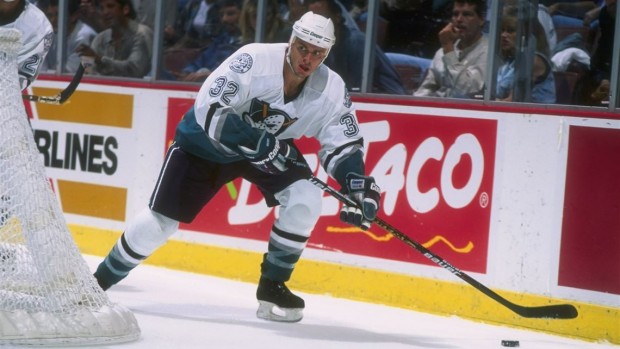
Hicks was a fresh-faced 23-year-old Canadian when he started his pro career with the Toledo Storm in 1992. The offensively gifted center helped lead the city’s former ECHL team to two Riley Cups, laying the foundation for a five-year career in the NHL.
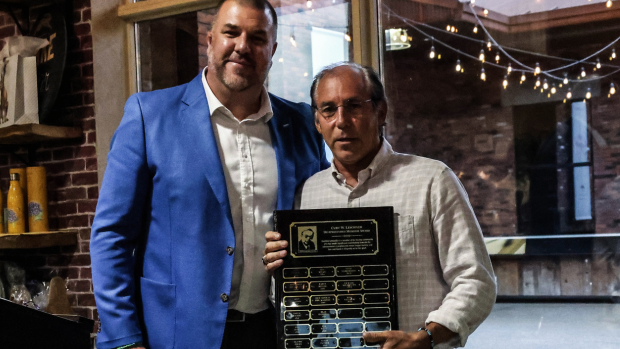
Hicks will be inducted into the ECHL Hall of Fame along with former teammates Rick Judson and Jim Bermingham on Jan. 20. The ceremony takes place at noon at the SeaGate Centre.
“I came in a boy and I had no idea what I was getting into,” Hicks said. “My teams in Toledo were unbelievable. I remember all of the players and coaches. I remember the fans and the support we had and all the success we had. After I left Toledo, I took [those] lessons with me.
“I wouldn’t [be] where I am without those experiences I had in Toledo.”
Hicks, who is now in his fourth year as an assistant coach at Arizona State University, ended up recording 140 points with 57 goals and 83 points in 112 games in two seasons in Toledo.
Hicks made his NHL debut with the Anaheim Mighty Ducks in 1995-96. The 6-foot-0, 195-pound forward ended up posting 79 points with 25 goals and 54 assists in 258 career NHL games with Anaheim, Pittsburgh, San Jose, and Florida.
In two seasons with the Penguins, he was teammates with Hockey Hall of Famers Lemieux and Jagr. In 1995-96 at age 26, Hicks posted a 20-point season and finished 12th on the potent Penguins in scoring. Hicks started his NHL career in Anaheim with Teemu Selanne and finished it in Florida with Pavel Bure.
“I was fortunate enough to play with some of the game’s greatest players. I have so many great memories from playing in that league,” Hicks said. “I’d watch Lemieux, Jagr, Selanne, Bure in practice and it was incredible.”
But Hicks said he first needed to learn the ropes in the ECHL. After playing Division III college hockey, Hicks was an integral part of the Storm’s Riley Cup championship teams in 1993 and 1994, tallying 35 points (15 goals, 20 assists) in 30 postseason contests.
“It was a team built around toughness that could still play,” Hicks said. “Being in [the Sports Arena], the crowd was on top of you. They made it so difficult for opposing teams. We felt we would win every game.”
Hicks said when he received the call from the ECHL, the memories came flooding back.
“I’m so excited. The players and names keep popping in my head,” he said.
Two other key members of those Riley Cup-winning teams, Chris McSorley and Greg Puhalski, also will be Toledo for the all-star weekend festivities. McSorley, the colorful former Storm coach, as well as his top producer and assistant coach in 1992-93, Puhalski, will be inducted into the Toledo Hockey Hall of Fame.
“I’ve told them all in different ways what they’ve meant to me, but it will be great to see them all again,” he said.
Hicks credited another former teammate, Iain Duncan, for taking him under his wing. Duncan had played four seasons in the NHL and was in the twilight of his career when he joined the Storm.
“Alex came out of Wisconsin, and right away I could tell the kid had the passion and the drive,” Duncan said. “He was really, really green and I was in my seventh year [as a] pro. He wanted to learn. That is the fun part. He was like a sponge.”
The unlikely pair were roommates on the road.
“Iain had a huge impact on my career,” Hicks said. “I was fortunate to play two full years with him as my left winger. He taught me so much about how to be a pro and how to play the right way. I think about him often.”
Duncan said he enjoyed being a mentor to Hicks and was thrilled to see his pupil reached the pinnacle like he had.
“I showed him what to do on and off the ice. How to eat. How to respect people. How you check your gear,” Duncan said. “He was very skilled. And it was a pleasure to play with him. He scored some big goals, but also played good defense. He was fast. He was one of those guys that wanted more. I could see the kid had something. He took it all in and he fed off it. It was great to see a kid like that make it to where he did.”
Hicks said Puhalski was hard on him, but fair.
“It was tough love. And I didn’t always like him in the moment. But he had a very positive impact,” he said.
Hicks said McSorley showed belief in him.
“McSorley was incredible to me. He gave me the opportunity and showed me what I needed to do to get to the NHL,” Hicks said. “He was one of the only ones to see the potential. He literally gave me the blue print.”
Hicks spent the final six years of his playing career in Germany.
He said he and his wife are looking forward to attending the hall of fame luncheon.
“I was really surprised to get the call,” Hicks said. “It’s not something I had put too much thought into. The early [1990s] seem like a lifetime ago. That’s three kids and 10 dogs ago. I’m an old man now. But I’m really looking forward to it.”