This is a two-part series on NHL Shooting and Skills Coach, Tim Turk. In part one, Tim shares his beginnings in hockey, development and growth as a shooting coach, the services he provides to help improve a players’ skillset at any level, and his road to the National Hockey League.
Part-two of our sit down with Tim looks at the technical side of shooting, including tracking and measuring progress, creating power in a shot, advice on selecting the proper stick and gloves, and what it’s like to work with P.K. Subban of the Montreal Canadiens and Steven Stamkos of the Tampa Bay Lightning.
For more information on Tim, visit www.timturkhockey.com.
Part 1
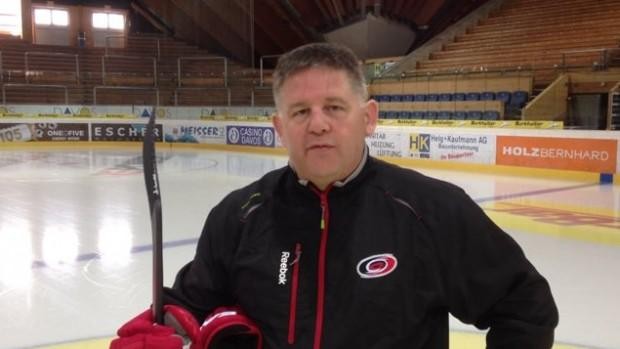
Tim Turk has been working as a skills and shooting coach at the NHL level since 2001. Throughout his career, he has been instrumental in the development of some of the game’s brightest stars, including the likes of Steven Stamkos and PK Subban. Turk has worked for several NHL organizations, including the Montreal Canadiens, Tampa Bay Lightning, and Carolina Hurricanes as well as various prospect development camps, and for International Federations. From humble beginnings as a goalie coach shooter to establishing Tim Turk Hockey, Turk has carved his niche as a highly recognized, respected, and sought after shooting and passing specialist. He has the innate ability to dissect and break down the entire shooting process, helping players make the necessary tweaks to enhance their performance.
Turk teaches every facet of the shooting process from shot preparation, body configuration, release, and follow through. He works with coaches and players of all ages and levels, offering valuable insight for any level of hockey player ranging from youth to pro.
Hockey Background & Beginning Phases of Tim Turk Hockey
“Tim Turk Hockey all began when I was 15-20. At the time I was working as a shooter for a goalie school. A couple of years passed and the owner of the goalie school suggested my partner and I teach shooting as we were really precise. Back then, (25-26 years ago) there were no shooting schools. My partner and I were youngsters at the time and we were looking at each other and thinking we know nothing about business. At the time we kind of wrote the idea off.
Some more time passed and unbelievably, the owner of the school said, ‘I will open up a shooting school, one of you guys can shoot on the goalies and the other can teach shooting’. The idea was really cool but the first thing we thought of was, how we are going to get people in here because we knew nothing about business, promotion, or marketing. The owner said that he would take care of it as, ‘every goalie knows more than two players’. So, he had a really high number of clients that knew a lot of players. He just put a sign on the wall that said ‘if anyone brings a player that signs up for our shooting classes then you will get a free session’. That is how it all started and took off from there.”
Tim Turk Hockey Growing Over the Years
“Initially, we were from the Mississauga, Ontario area. A lot of good players came out of the Greater Toronto Area who made it to high levels of hockey. Some of those players included Steven Stamkos, Jason Spezza and Manny Malhotra. At that time they were young, but as they got older and more established, the players we had helped spread the word by talking about us with their peers. That in itself was excellent advertising and it helped expand our business.”
Different Services Provided
“Everything in hockey ends in a shot. Now we can begin to explain the process of how we developed our methods. It all stemmed back to that original goalie coach my partner and I worked for. He was so technical in his teaching and we learned a lot from him. One of the things he would utilize is, not only what motion you are going to be using to do things but how do you connect your mind to the action so that you feel comfortable when you learn how to enhance it. At that point my partner and I knew shooting would be our number one focus. However, to be able to shoot the puck you have got to be able to control the puck. It is the same as passing. The technique between passing and shooting is very similar. If you can’t protect the puck or you can’t prepare the puck to be shot, passed, or dumped in, then the foundation is not there to execute those actions at a high level. That is where we come in. To ensure the player can execute the technical components of those actions at a high level. For example, to protect the puck is a different body motion than preparing to receive the puck to take a one timer. Another example, the body motion is also different if you are stopping and doing a two-touch shot. That is where you receive the puck quick and shoot it right away. So as you can see, there is a lot of technical things we had to expand on.
Service wise, I teach the art of shooting and passing, the types of passes you can do, how to protect the puck and control it, and what’s more, the preparation to those actions which are so vital. You can work 10, 20, 30 sessions on simply learning how to protect the puck so that you can shoot the puck quicker. Then there is adding power to the shot and so on and so forth. I am expanding to the services I provide. I started a new website www.turkssnipers.com that provides online video training courses to people I would otherwise not be able to teach in person. People can sign up for my online courses and get the same thorough step-by-step instruction as I teach the pros. I also work with Federations in Europe and do a lot of seminars to coaches on individual skill development and what to look for in players and how to deliver messages to players to help them become more successful when they are using those individual skills such as shooting and passing.”
How Tim Turk Developed his Methods
“What we would do is video record each other and go over the motions and movements we were doing in the type of shots we were taking. Because that original goalie coach was such an innovator and a highly technical individual, learning from him helped us to dissect the motions we were doing and helped us understand how the actual stick worked. With me, I always believed, you can’t teach every person the same type of technique because everyone is configured different, their body size differs and their ability to create speed and power in a certain distance or area is different. It is based on how that individual trains and what their body motions allow them to do, what their restrictions are, if there are injuries, etc. There are so many different variables that need to be addressed. I think to further on that, most players that have been doing things for so long have a hard time making tweaks or are reluctant to make big changes. For instance, I am a righty and say I am the best shooter in the world. So should I ask you to shoot right if you are left handed? Rather, I should see what the best way is to enhance your type of shot because you are a lefty, without making you feel too uncomfortable and that makes you say ‘hey Turk, that doesn’t feel good so I am not doing it’.
Working on your shot is a never-ending process because the game always evolves and with that the player has to make changes. These changes can be so subtle. For example, changing where the puck is on the blade while you are doing a certain action or how far you load the stick before you shoot it. Shooting changes all the time depending on the situation. I can create an endless variety of game situations to help enhance the player’s shot in all those scenarios.”
Road to the NHL:
“Initially, I started in Montreal with the Canadiens. For me, it is a great success story and I feel blessed to be able to be a part of it. This was back in the 2007-08 season. One of the skills and development coaches, Trevor Timmins, who is still with the organization, wanted to meet me. Trevor had a good friend, a skating coach by the name of Paul Lawson. At one time, Paul, who knew me because I was training his son, came to me and said ‘Trevor Timmins could not make it to the Canadiens development camp and I mentioned your name to him and now Trevor wants to meet you’. That year, I met Trevor at the NHL combine held in Toronto. Trevor said to me, ‘I’ve never heard of you before but ever since I started asking about you, people are bringing everything about you to my attention, saying that you are a pretty good shooting coach. We would like to try you out at our development camp. We are reluctant because we have never seen you in action’ to which I replied, here are some players you can call. I guess they did their homework because they brought me in. When I got into the development camp, one of the coaches of the time was Kirk Muller. Kirk actually gravitated towards me for a few different reasons. Number one, I was technical and Kirk said to me ‘Oh man, if I had met you when I was playing, I think I would be able to play a few extra years and maybe score some more goals. I really like what you are doing’. Combining technical development with the types of drills that I do was very successful. At the time the coach of the Canadiens was Guy Carbonneau. He would come up to me and say “we are really happy to have you on board, can you take the team and run some practices?” The players really liked some of the drills I did and it just flowed from there.
A couple years later the Canadiens organization hired Guy Boucher to coach their American League team and that’s when the Hamilton Bulldogs found a lot of success. Boucher was a huge supporter of individual skill development. Hence, I spent some time developing players on the Bulldogs team. I would attend their practices once every other week and the players there also really liked my methods. The players that we worked with were really successful in developing their game.
A while later, Guy Boucher went on to be the Head Coach of the Tampa Bay Lightning and Kirk Muller went on to be the Head Coach of the Carolina Hurricanes. It was pretty unique where it just worked out that Carolina at the time called me and asked if I could come work at their camp at the same time Steve Yzerman, through Guy Boucher, called me and also asked if I could work the Tampa Bay Camp. I went from Montreal’s initial rookie combine camp to Tampa Bay’s development camp and right from Tampa to Carolina all in the same year.”