TORONTO – William Nylander surveyed the ice as he held the puck along the half-wall on a Toronto power play early this fall. He looked, looked some more, saw no openings and dished off to a teammate at the point before promptly receiving it back. A lane flashed open almost immediately and Nylander flung the rock to P.A. Parenteau, who zipped a shot past the Ottawa Senators goaltender.
“I saw that pass coming a mile away,” Parenteau said afterward, before adding a thought on the eighth overall pick from the 2014 draft. “He’s got a great future.”
The Maple Leafs are certainly keen on that future, but they’ll wait patiently for it to arrive.
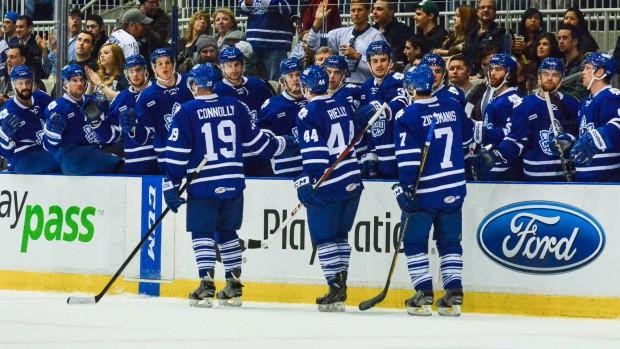
Nylander and a handful of other promising young talents were reassigned to the Toronto Marlies Sunday in the penultimate round of roster cuts, the latest decision reaffirming the club’s commitment to a slow, patient build.
The Leafs, under Brendan Shanahan’s leadership, have talked often about the long view in regards to prospects, development and general philosophy, railing against the shortcuts and quick fixes of past regimes. “I think it is on us to have the determination to stick with the plan and to do this the right way,” said Shanahan back in April.
The Leafs did just that in sending Nylander, Connor Brown, Zach Hyman and Kasperi Kapanen, among others, off for more seasoning in the AHL.
“At this time the right thing is for them to go and be the best possible players they can be,” Leafs general manager Lou Lamoriello said of the group assigned to the Marlies. “There’s no timetable for when they would be here or when they wouldn’t be here. There’s a lot of decisions that will be made as the season goes on. They could be here before you know it or it could be some time.”
Nylander could play in the NHL right now, the organization knows, but such a prospect is not what’s best for the club’s long-term interests nor the 19-year-old and his development.
Shifting back to his natural centre ice position on North American ice this fall, Nylander will only be helped, not hurt, by the added American League experience; he’ll only become more prepared to play in the NHL down the line – likely by next season – while developing a better sense, as Brad Boyes explained it earlier this fall, of how the game is played.
Nylander thrived with 32 points in 37 games as a Marlie last season.
The Leafs aren’t served economically to push him into the league at this time either. Not only would they exercise a year of Nylander’s entry-level contract in a lost season, but they’d bring about unrestricted free agency one year sooner; players are eligible after seven accrued seasons (accrued meaning 40 games or more on an active roster).
Mike Babcock, the Leafs head coach, praised Nylander and the youth on hand often throughout the two-week training camp. He went so far as to call him and Connor Brown the team’s best forwards following a dispiriting shutout loss against Buffalo.
“I like these kids,” Babcock said glowingly at one point. “So I don’t know, are we going to have them here or are they going to play for the Marlies? I don’t know.”
It’s doubtful that the Leafs were ever really tempted though. Shanahan, at least so far in his term as team president, has insisted on big-picture thinking.
Babcock, who comes to Toronto from the NHL’s development capital in Detroit, insisted, too, that he wasn’t interested in 10-game auditions or anything of that sort. He wanted players who were ready to play not just in October but in March and April, cautioning against rash decisions in the short-term.
“We better know what we have before we get in a hurry to do something and then we find out later it was wrong,” he said. “Being patient, I think, is important.”
The Leafs ensured that patience in some ways by stocking up on veteran players with short-term contracts this past offseason. Shawn Matthias, Michael Grabner and P.A. Parenteau were among the temporary fill-ins added, additions that could be flipped for other assets at some point if their performance warrants interest.
Lamoriello said the Leafs were intent on determining what exactly their contributions could be.
“The first thing is for us to see where our veterans are at and what type of a team we have, how the people respond to Mike – which they’ve been tremendous in doing – and [the young players] understand,” said Lamoriello.
“I’m sure they’re disappointed but they’ll be here before they know it.”