That first night in Los Angeles, Bryan Rust could just kick back and relax.
The Michigan native, barely 18, flew down with his family to attend the 2010 NHL draft. Projected to be selected in the middle rounds, Rust enjoyed watching old teammates and opponents get picked in Round One at Staples Center.
“Day Two was a bit of an anxiety-filled day, just waiting to hear your name being called,” the right winger, now 28, recalled last week.
During the third round, after 70-something teenagers had already experienced a lifelong dream, Rust said his family adviser’s phone started ringing.
“They said there were two teams coming up that may draft me,” Rust said.
The New York Islanders would have to settle for another forward in Jason Clark, who never advanced beyond the American Hockey League. The Penguins, led by general manager Ray Shero, grabbed Rust two picks earlier at No. 78.
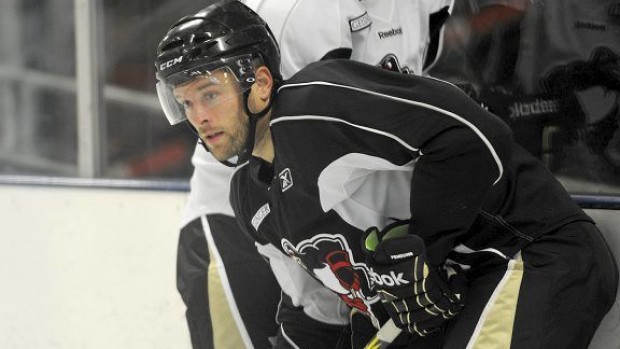
It would take nearly six years for Rust to establish himself as an NHL regular. The patience displayed by both the player and organization eventually paid off with a bunch of clutch plays as the Penguins won back-to-back Stanley Cups. Today, Rust is a top-six winger who was on a 30-goal pace in the shortened 2019-20 season.
A decade after he was drafted, Rust is just one example of Pittsburgh’s success in drafting and developing middle-round selections. That list includes Jake Guentzel, Matt Murray, Oskar Sundqvist, Sam Lafferty and Dominik Simon. They hope to find more middle-round keepers during this week’s NHL draft.
The first round of the draft, originally scheduled for late June, takes place virtually Tuesday night. The Penguins currently have just four picks. With none in the two rounds, they are not on the clock until the third round Wednesday.
Trading away so many premium picks in pursuit of more sips from the Stanley Cup, especially under current GM Jim Rutherford, the Penguins have actually gotten more impact from the third round over the last decade than the first.
“We take a lot of pride in it,” said director of amateur scouting Patrik Allvin, who has been in the organization since 2006. “Being a top contender every year, it’s a little bit more of a challenge to find those mid-to-later-round picks.”
Why have they been so successful? Rust’s story is an excellent explanation.
All about projection
During his draft year, Rust was in his second season with the U.S. National Team Development Program, which was then headquartered in Ann Arbor, Mich. That was an hour-long drive from Troy, the Detroit suburb where he grew up.
After totaling just 15 points in 42 games during his first season with the USNTDP, Rust broke through with 10 goals and 23 points in 27 games in 2009-10.
Rust had already committed to play at Notre Dame. He was obviously hopeful an NHL team would draft him. But the realization that it could actually happen didn’t set in until he first showed up on the NHL Central Scouting prospect list.
“You’re checking those Central Scouting lists to see how you compare to all the other players who could be drafted,” he said. “It’s a little overwhelming.”
When the final rankings came out, Rust was 80th among North American skaters. Later that April, he represented the U.S. at the IIHF World U-18 Championship, a key late-season scouting event that was canceled this year due to the pandemic. He scored four goals in seven games as the U.S. claimed the gold medal.
That performance solidified Rust as a draft target for the Penguins, who under both Shero and Rutherford have not shied away from selecting prospects on the college path despite knowing they might not turn pro for four years.
They picked Rust late in the third round, well ahead of where the Central Scouting ranked him, figuring he might become a useful role player someday.
“Our job generally is to project what the player is going to be between age 22 and 25. What intangibles does he have? And what’s the potential upside there?” Allvin said, adding, “[Rust] played with speed. He played with energy. But, to be honest, I don’t think we projected him to score close to 30 goals in a season.”
Among all third-round picks from 2010, Rust leads the group in goals (78), points (170) and plus-minus (plus-37). Only two have skated in more games.
Not bad for a guy who wasn’t even invited to the NHL scouting combine.
“There were the top, blue-chip prospects everybody was always talking about,” Rust said. “I was somewhere in that next wave of guys who were trying to prove, ‘We’re good, too, and we’re definitely going to prove you guys wrong.’ ”
Trust the process
TSN draft expert Craig Button, whose savvy selections helped Dallas win the Cup in 1999, praised Pittsburgh for taking the long view in the later rounds.
“Teams that have success are looking at qualities,” he said. “They’re not saying, ‘OK, we need this guy in three years’ or ‘Who’s the guy who’s going to be the fastest?’ They say, ‘Who do we like and who has the most potential?’ ”
Those qualities, he said, should start with hockey sense and determination.
Button believes the “vast majority of mistakes” scouts make while evaluating teenagers is falling for bigger players who at times dominate their peers due to a sheer size and strength advantage. They overlook that smaller kid, the one who can barely grow a mustache but keeps showing up near the puck.
“Why do we always talk about these players emerging from the later parts of the draft? For the most part, most were physically immature,” Button said.
Just look at the little runt whom Shero selected 77th overall in 2013.
“Jake Guentzel always had great hockey sense and great processing speed. And he had the outstanding, quick hands,” Button said. “All he needed to do was allow the physical maturation process to take place. And that’s what happened.”
Only five players from the 2013 class, all of whom went in the top-10 picks, have scored more goals. And that’s because they got a head start. Guentzel has more per game than even Nathan MacKinnon, Colorado’s No. 1 overall pick.
And then there’s Murray, a 2012 third-round pick who backstopped the Penguins in their 2016 and 2017 Stanley Cup runs. And Sundqvist, who contributed to title teams in both Pittsburgh and St. Louis. Go ahead and tack on Tristan Jarry and Teddy Blueger, two second-rounders who took several years to arrive.
The verdict is still out on many of the middle-rounders picked by Rutherford since he was hired in 2014. Lafferty did some good things as a rookie, and Allvin thinks 2019 third-rounder Nathan Legare could be a “special” scorer someday.
“It’s a collaborative process,” Allvin said. “Our job is to bring in the right people, the right character, the right skill guys to the organization and then we hand them over to the development department. Those guys know when the right time is to pull up a player or whether they need another year in Wilkes-Barre.”
Getting ready for ‘marathon’
During Rust’s sophomore year at Notre Dame, it seemed even less likely that the 5-foot-11 right winger would become a contributor here in Pittsburgh.
After surprising with 19 points in 40 games as a freshman, he produced just 11 points. His all-around performance dipped. His confidence cratered.
While Rust was there, Penguins player development staffers mostly spoke with Notre Dame coaches, making sure they were on the same page when it came to Rust’s development. They talked to Rust only a few times a year. But the pointers and pep talks they provided got him moving in the right direction.
“I had a horrible sophomore season at Notre Dame,” he said. “They were right there. They stuck with me. We worked through it, and here I am today.”
Rust rebounded with 32 goals and 67 points over his final two collegiate seasons. He was an alternate captain for the Fighting Irish his senior year. His work ethic, in his assessment, got much better. Skating became his biggest strength.
Rust would then spend parts of three seasons in Wilkes-Barre/Scranton, playing for a pair of future NHL head coaches in John Hynes and Mike Sullivan. He said the meals, travel, facilities and support staff was “basically at an NHL level.”
“The American [Hockey] League was an awesome experience,” Rust said. “When you’re playing there, everybody’s all fighting for the same thing — they’re trying to get to the NHL. But I think every player knows that for you to look good, your team has to look good. The coaches definitely got [that] across there.”
After making the long drive across Pennsylvania a few times, he earned a regular role in Pittsburgh in the second half of 2015-16. The rest is history.
On Wednesday, the Penguins are optimistic they can unearth another gem in the middle rounds. Rust’s advice to those picks is to prepare for “a marathon.”
“You might be a pretty good player when you’re drafted, but you’ve got a long ways to go,” Rust said. “Six years, I think, was how long it took me.
“The organization knows there are going to be ups and downs. It’s going to be a bit of a roller coaster. But at the end of the day, if you listen to what they’re saying and take their guidance you’re probably going to get the best chance that you can to be where you want to be. … It is amazing to see the strides guys take.”
Yes it is, Mr. Rust. Yes it is.